• Skip to main content
  • Skip to primary navigation
  • Contact
  • Give
  • Privacy
  • UC Berkeley
  • Accessibility
  • Nondiscrimination
Berkeley Engineering

CoE Sandbox

Educating leaders. Creating knowledge. Serving society.

  • About
    • Facts & figures
    • Rankings
    • Mission & values
    • Equity & inclusion
    • Voices of Berkeley Engineering
    • Leadership team
    • Milestones
    • Facilities
    • Maps
  • Admissions
    • Undergraduate admissions
    • Graduate admissions
    • New students
    • Visit
    • Maps
    • Admissions events
    • K-12 outreach
  • Academics
    • Undergraduate programs
    • Majors & minors
    • Undergraduate Guide
    • Graduate programs
    • Graduate Guide
    • Innovation & entrepreneurship
    • Kresge Engineering Library
    • International programs
    • Executive education
  • Students
    • New students
    • Advising & counseling
    • ESS programs
    • CAEE academic support
    • Student life
    • Wellness & inclusion
    • Undergraduate Guide
    • > Degree requirements
    • > Policies & procedures
    • Forms & petitions
    • Resources
  • Research & faculty
    • Centers & institutes
    • Undergrad research
    • Faculty
  • Connect
    • Alumni
    • Industry
    • Give
    • Stay in touch
Home > News

Materials science

Winners of 2022 Bakar Spark Award: Grace Gu, Daniel Klein, Liwei Lin, Angjoo Kanazawa and Phillip Messersmith

Bakar Fellows names Spark Award recipients

06/14/22 — Five engineering faculty among the seven honored for research that produces tangible, positive societal impact through commercialization

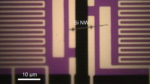
Optical microscopy image of silicon nanowire

New silicon nanowires can really take the heat

05/24/22 — Berkeley Lab: Berkeley researchers show that the new material conducts heat 150% more efficiently, a result that could lead to smaller, faster computer processors
Colorful electron microscope image of pure titanium with a nanotwinned structure.

A new time for titanium

05/08/22 — Researchers have developed critical insights that could ultimately lead to a stronger, cheaper and more sustainable metal.
New AAA&S members Gerbrand Ceder and Ramamoorthy Ramesh

Ceder, Ramesh elected to AAAS

04/28/22 — Materials science and engineering professors are among nine new Berkeley members of the American Academy of Arts & Sciences
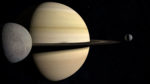
The icy moon Enceladus orbits Saturn.

Study of aqueous salt solutions deepens our understanding of icy planets’ oceans

04/26/22 — New findings may help determine the possibility of extraterrestrial life in our solar system
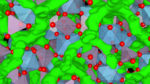
Graphic illustration of lithium ion crystal structure

Researchers discover pathway to safer lithium-ion batteries

04/13/22 — New study describes materials that offer stability and high conductivity in solid-state batteries
Animation of placement of nanoparticles in a self-assembling material

With a little help, new optical material assembles itself

02/04/22 — Berkeley Lab: Breakthrough by materials scientist Ting Xu and her team could enable large-scale manufacturing of nanomaterials for industry
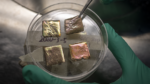
petri dish with smart roof coating samples

New smart-roof coating enables year-round energy savings

12/16/21 — Berkeley Lab: Rooftop material that automatically switches between radiative cooling in the summer to heat retention in the winter could lower household energy costs
Illustration of hourglass, containing plastic transforming into compost

Back down to earth

11/15/21 — Materials science professor Ting Xu is re-engineering plastics for the age of sustainability.
Reginal DesRoches

UC Berkeley alum Reginald DesRoches named president of Rice University

11/12/21 — DesRoches is the seventh Berkeley Engineering alumnus to become the head of a university in the past four years
Electron backscatter diffraction image of titanium.

Stronger, lighter, better

10/21/21 — Berkeley Lab: Research led by Andrew Minor, professor of materials science and engineering, shows sustainable manufacturing potential of nanotwinned titanium
Lane Martin and Kristin Persson

Berkeley engineers named American Physical Society Fellows

10/13/21 — The honor recognizes the outstanding contributions to physics by Lane Martin and Kristin Persson, both professors in the Department of Materials Science.
Frame capture from video about making plastics self-destruct

How to make plastic truly biodegradable

08/31/21 — Professor Ting Xu and her students have come up with a solution for the global problem of single-use plastics: embed enzymes so that the unwanted plastic can self-destruct with a little heat and water
Photo illustration of sugar cubes over cosmic background

NASA sweetens the pot

08/26/21 — Berkeley team of chemists and engineer wins CO2 Conversion Challenge to make sugar in space from carbon dioxide
Hyungjin Kim and Ali Javey

Researchers demonstrate new semiconductor device possibilities using black phosphorus

08/11/21 — Material's "magical" properties under stress and strain could help meet growing demand in optical communications and more
Animation of magnet pulling binary numbers

Berkeley scientists create world’s thinnest magnet

07/20/21 — Room-temperature 2D magnet could advance applications in computing and electronics
STEM tomography image of a 3D-grown 100-200-nanometer crystalline disc.

Crystal impurity is sheer perfection

06/29/21 Berkeley Lab — 3D-grown material designed by Berkeley researchers could speed up production of new technologies for smart buildings and robotics
3D illustration of a hexagonal graphene structure

A new twist

04/26/21 — By stacking and twisting graphene layers, researchers have converted a linear material into one with non-linear capabilities crucial to technology.
Blue plastic bags

Out of the bag

04/26/21 — A chemical process that converts polyethylene plastic into a strong adhesive could create economic incentives for recycling plastic bags.
Graduate student Ivan Jayapurna with a sample film of PCL (polycaprolactone), a new, biodegradable polyester plastic.

New process makes ‘biodegradable’ plastics truly compostable

04/21/21 — Ting Xu's lab has embedded polymer-eating enzymes in plastic to allow programmed degradation after the plastic's useful life is over
  • « Go to Previous Page
  • Go to page 1
  • Go to page 2
  • Go to page 3
  • Go to page 4
  • Go to page 5
  • Interim pages omitted …
  • Go to page 11
  • Go to Next Page »
  • Contact
  • Give
  • Privacy
  • UC Berkeley
  • Accessibility
  • Nondiscrimination
  • instagram
  • X logo
  • linkedin
  • facebook
  • youtube
© 2025 UC Regents