• Skip to main content
  • Skip to primary navigation
  • Contact
  • Give
  • Privacy
  • UC Berkeley
  • Accessibility
  • Nondiscrimination
Berkeley Engineering

CoE Sandbox

Educating leaders. Creating knowledge. Serving society.

  • About
    • Facts & figures
    • Rankings
    • Mission & values
    • Equity & inclusion
    • Voices of Berkeley Engineering
    • Leadership team
    • Milestones
    • Facilities
    • Maps
  • Admissions
    • Undergraduate admissions
    • Graduate admissions
    • New students
    • Visit
    • Maps
    • Admissions events
    • K-12 outreach
  • Academics
    • Undergraduate programs
    • Majors & minors
    • Undergraduate Guide
    • Graduate programs
    • Graduate Guide
    • Innovation & entrepreneurship
    • Kresge Engineering Library
    • International programs
    • Executive education
  • Students
    • New students
    • Advising & counseling
    • ESS programs
    • CAEE academic support
    • Student life
    • Wellness & inclusion
    • Undergraduate Guide
    • > Degree requirements
    • > Policies & procedures
    • Forms & petitions
    • Resources
  • Research & faculty
    • Centers & institutes
    • Undergrad research
    • Faculty
  • Connect
    • Alumni
    • Industry
    • Give
    • Stay in touch
Home > News

AI & robotics

Hany Farid

EECS professor Hany Farid and I School Ph.D. students featured on PBS Nova

04/17/24 — School of Information: The episode, “A.I. Revolution,” covers the dangers of deepfakes — and how easily they can be created

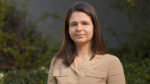
Francisca Vasconcelos, a doctoral student in UC Berkeley’s Department of Electrical Engineering and Computer Sciences.

Francisca Vasconcelos chosen as Paul and Daisy Soros New American fellow

04/17/24 — CDSS: EECS doctoral student to receive up to $90,000 through merit-based program for immigrants, children of immigrants
A pink robot hand and a pink human hand reach for each other against a blue background.

How to keep AI from killing us all

04/09/24 — UC Berkeley researchers: Companies should not be allowed to create advanced AI systems until they can prove they are safe
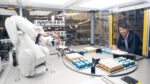
Illustration of a robot arm, vials, a laptop and a beaker on a desk facing the window.

How scientists are accelerating chemistry discoveries with automation

04/08/24 — Berkeley Lab: New statistical-modeling workflow, developed by MSE professor Kristin Persson’s group, may help advance drug discovery and synthetic chemistry
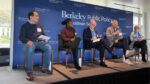
EU AI Act panel (from left to right): Yiaway Yeh, Deborah Raji, Stuart Russell, Gerard de Graaf and Pamela Samuelson.

UC Berkeley summit tackles AI governance, trust, ethical tech

03/21/24 — School of Information: Computer scientists Stuart Russell and Deborah Raji discuss European Union AI Act
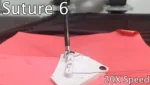
Still image from video of AI-trained surgical robot that was able to sew six stitches all on its own.

Watch this robot as it learns to stitch up wounds

03/05/24 — MIT Technology Review: Berkeley researchers' AI-trained surgical robot was able to sew six stitches on its own — and has lessons for robotics as a whole
Photo of Nika Haghtalab, assistant professor of electrical engineering and computer sciences.

EECS professor named Schmidt Sciences AI2050 Early Career Fellow

03/04/24 — CDSS: Nika Haghtalab among cohort that will conduct ambitious artificial intelligence research to benefit society
Image of BB-8, a robot with a dome-shaped head and spherical body colored white with orange and silver geometric accents, seen in Star Wars films.

Researchers explore the phenomenon of holonomy

02/13/24 — New insights may advance motion and path planning for spherical robots
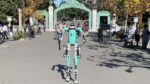
Photo of Berkeley researchers

Human-sized robot taught itself to walk and balance, then strolled Berkeley’s streets

12/19/23 — SFGATE: Berkeley researchers used billions of simulations and reinforcement learning to teach the robot how to move
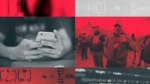
Photo illustration showing a collage of mathematical images, a person using a smart phone, and insurrectionists.

Disinformation nation: What can we do to crack the code?

11/20/23 — Berkeley researchers “probe the corrosive effects of algorithms, machine learning and other exotic technologies” and offer possible solutions
Image of photonics.

Researchers develop design tool to optimize quantum optics circuits in silicon

11/13/23 — New machine learning-based optimization method for nonlinear and quantum optics may open the door to large-scale communication and quantum computing applications
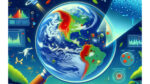
Illustration showing a magnifying glass on planet Earth, which is surrounded by rockets in the air, trees and scientific images. A team at UC Berkeley has created a new statistical technique that allows researchers to safely use the predictions obtained from machine learning to test scientific hypotheses. This image shows an artistic interpretation of the technique, called prediction-powered inference, which has been generated by the DALL-E AI system.

How to use AI for discovery — without leading science astray

11/09/23 — Berkeley researchers present new statistical technique for safely using predictions obtained from machine learning models to test scientific hypotheses
Ann, in a wheelchair, is connected to computers that translate her brain signals into the speech and facial movements of an avatar. At left is UCSF clinical research coordinator Max Dougherty.

Put into words

11/06/23 — An implantable, AI-powered device can translate brain signals into synthesized speech and facial expressions.
Professor Gerbrand Ceder inside the fully automated A-Lab

Materially better

11/06/23 — To make next-gen batteries, professor Gerbrand Ceder is finding innovative ways to accelerate the research on key materials.
Photo of the exterior of Calvin Lab, home to the Simons Institute for the Theory of Computing, UC Berkeley.

Simons Institute for the Theory of Computing receives $25M matching pledge

10/19/23 — Simons Institute: Gift from SFI will help support ongoing innovation and research into theoretical computing
Artist

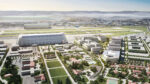
Berkeley Space Center at NASA Ames to become innovation hub for new aviation, space technology

10/16/23 — UC Berkeley will develop a 36-acre site to house companies, labs and students in heart of Silicon Valley; learn more about the Berkeley Space Center
Illustration of AI microchip on a motherboard circuit with shades of purple and pink.

$15.3M awarded to CA-Pacific-Northwest AI Hardware Hub

10/13/23 — UC Berkeley to co-lead Microelectronics Commons regional innovation hub funded by the U.S. Department of Defense
Image of soundproofing material under red and blue lighting.

Researchers develop new AI-based design method for metamaterials

10/10/23 — Innovative approach can create everyday products with novel mechanical properties
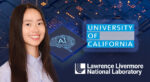
Image of Grace Gu with microchip in the background, along with an image depicting AI, University of California, and Lawrence Livermore National Laboratory.

Grace Gu selected as inaugural recipient of the LLNL Early Career UC Faculty Initiative

10/02/23 — LLNL: Assistant professor of mechanical engineering to receive $1M as part of LLNL, University of California partnership for AI-driven additive manufacturing research
Photo of EECS professor Alberto Sangiovanni-Vincentelli.

Q&A: Alberto Sangiovanni-Vincentelli on co-founding Cadence and Synopsys

09/20/23 — DIGITIMES Asia: Berkeley Engineering professor recounts establishing the world's two largest electronic design automation companies, shares innovative projects that he is pursuing
  • Go to page 1
  • Go to page 2
  • Go to page 3
  • Interim pages omitted …
  • Go to page 14
  • Go to Next Page »
  • Contact
  • Give
  • Privacy
  • UC Berkeley
  • Accessibility
  • Nondiscrimination
  • instagram
  • X logo
  • linkedin
  • facebook
  • youtube
© 2025 UC Regents