CoE Sandbox

Category: Students

  • Rohan Phadte: Fake news fighter

    Rohan Phadte: Fake news fighter

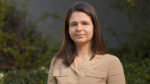
    Rohan PhadteRohan Phadte is a third-year electrical engineering and computer science student on a mission to battle fake news with the power of machine learning. Phadte, along with his roommate, collaborator and computer science major Ash Bhat, created Robhat Labs as a side project to develop software that tracks how false or misleading information spreads across the internet.

    “It’s hard to determine if something is fake news,” Phadte said. “Machine learning algorithms can’t tell if something is true or not.” But what is possible, he said, is tracking patterns of how things are shared. And by using waypoints and benchmarks, machine learning technologies are able to tell if information is coming from legitimate sources, or sources devised to spread misinformation.

    The Robhat Labs team first grabbed their own headlines in 2017 when they built NewsBotAI, a Facebook Messenger app that can identify political slant in news articles. Later that year, the team built a Google Chrome extension, botcheck.me, which adds a clickable button to Twitter profiles, enabling users to vet whether the handle is run by an actual person. Unlike other social media profiles, Twitter allows users to create bots, or automated functions, which are used for all kinds of things, ranging from users optimizing when their posts are published, to more nefarious activities like creating armies of fake profiles to quickly spread propaganda.

    Phadte said the team’s work has been well received. They’re now in the process of developing more advanced machine learning algorithms that will help legitimate content producers secure their photo and video content. One such algorithm can analyze the features in visual assets and create a dense representation, or a compressed version of the binary information unique to the image or video. Producers can then get alerts if their content is being hijacked or manipulated online.

    The team is working with political groups and media outlets as the battle against fake news rages on.

  • Chelsea Finn: Teaching robots to learn

    Chelsea Finn: Teaching robots to learn

    Chelsea FinnFor children, playing with toys isn’t just fun — it’s a key way to learn about the world around them. As it turns out, robots can also learn through play, as Chelsea Finn (Ph.D.’18 EECS) is showing through her groundbreaking work in deep reinforcement learning. Finn is an alumna of Berkeley Engineering and the Berkeley Artificial Intelligence Research Lab (BAIR). Now an assistant professor at Stanford University and a scientist at Google Brain, Finn is developing algorithms that enable robots to learn on their own, as children do, by building on previous explorations and observations.

    At BAIR, Finn had robots tackling a wide variety of tasks in real-world settings, in the hope that robots can eventually acquire common sense to be used in unpredictable situations. The robots are learning to manipulate, rearrange and grasp objects, mastering challenges like a wooden shape-sorting toy, through a process of trial-and-error instead of programming.

    A recent graduate, Finn has already drawn accolades for her research, including her selection for MIT Technology Review’s 2018 list of “35 Innovators Under 35.”

  • Commencement speakers: Words of student wisdom

    Commencement speakers: Words of student wisdom

    Andrew-Ian Gonzales Bullitt, Joseph Andrew Charbonnet and Tsai Chu Yeh.
    Graduation speakers Andrew-Ian Gonzales Bullitt, Joseph Andrew Charbonnet and Tsai Chu Yeh.

    This year, to the applause of family and friends in the Hearst Greek Theatre, and in front of their freshly minted engineering-degree-holding colleagues, three student speakers will take to the podium to deliver words of wisdom, practical advice and general impressions on what it means to be a Berkeley Engineer.

    While their speeches will be as diverse as the experiences that brought them to the stage and their ambitions for the future, their remarks will be tied together by one simple thread. They are all fiercely proud of the mandate they now embrace:  Use the skills they have developed during their time here to make the world better.

    Let’s meet the speakers:

    Andrew-Ian Gonzales Bullitt will deliver the student address during the baccalaureate ceremony. During his time on campus, Ian was worked with the student group Engineers Without Borders, represented engineering students in the ASUC, and managed to find the time to work as a fashion model. Ian is graduating with a bachelor of science degree in mechanical engineering.

    Tsai Chu Yeh, a bioengineering student receiving her master’s degree in translational medicine (M.T.M), will share remarks as the master’s student speaker. Coming from a family of physicians, she is passionate about healthcare innovation.  While at Berkeley, she has researched gene therapy and gained professional experience as an analyst for Johnson & Johnson.

    Joesph Andrew Charbonnet will be this year’s doctoral student speaker. It turns out Joe is well-rehearsed for the role, having just won the UC-wide Grad Slam research communications event with a lightning quick, three-minute summary of his environmental engineering dissertation. Joe was recognized for his work using manganese-coated sand to filter stormwater runoff, which could turn pollution into an aquifer-replenishing resource.

    Congratulations, graduates!

  • Nery Barrera: Forest guardian

    Nery Barrera: Forest guardian

    Nery Barrera

    Nery Barrera plans to save the trees. And the rivers. Before joining the Berkeley Engineering community as a transfer student last year, Barrera worked for the Guatemalan Forest Service. He says that he became passionate about applying engineering concepts to protecting natural resources after watching unchecked development change his childhood home of Jalapa, Guatemala.

    Now an environmental engineering student, he says, “I noticed how the expansion of our town affected the relationship of the community with the natural resources. I witnessed forested areas disappear completely, and the rivers become contaminated. That is when I knew what I want to do. It was not a difficult decision.”

    As a father, Barrera says he is also motivated to provide an example for the next generation. “With hard work, all of our dreams can become a reality,” he says.